Root Canal Calgary: Relieve Pain and Help Save Your Natural Tooth
Macleod Trail Dental provides root canal therapy in Calgary for teeth affected by deep decay, infection, trauma, or nerve damage. The goal of treatment is to remove infected or inflamed tissue inside the tooth, relieve pain, and preserve the tooth structure that can still be saved.
Why a Root Canal May Be Recommended
Root canal therapy is used when the pulp inside the tooth — the nerve and blood supply — is inflamed, infected, or no longer healthy enough to recover on its own. This can happen because of deep decay, a crack, repeated dental work, or trauma.
Without treatment, the tooth may keep hurting, the infection can spread, or the tooth may eventually need to be removed. Root canal therapy is designed to avoid that whenever possible. Under the 2026 Alberta Dental Fee Guide, it is $795.45 for a front tooth with one canal, $1,158.35 for a premolar with two and $1,354.65 for a molar with three.
What Root Canal Therapy Helps With
Persistent Tooth Pain
Treatment may help relieve pain caused by pulp infection or severe inflammation.
Sensitivity to Hot or Cold
Lingering temperature sensitivity can be one sign that deeper tooth structures are affected.
Swelling or Infection
Root canal therapy can help control infection in and around the affected tooth.
Preserving the Tooth
Saving the natural tooth is often preferable to extraction when the remaining structure is restorable.
Emergency Support
Patients in severe pain may need urgent assessment to determine whether a root canal is appropriate.
Restoration After Treatment
A crown may later be recommended to help protect the tooth depending on how much structure remains.
What Happens During a Root Canal
Most root canals take 60 to 90 minutes and are finished in one or two visits.
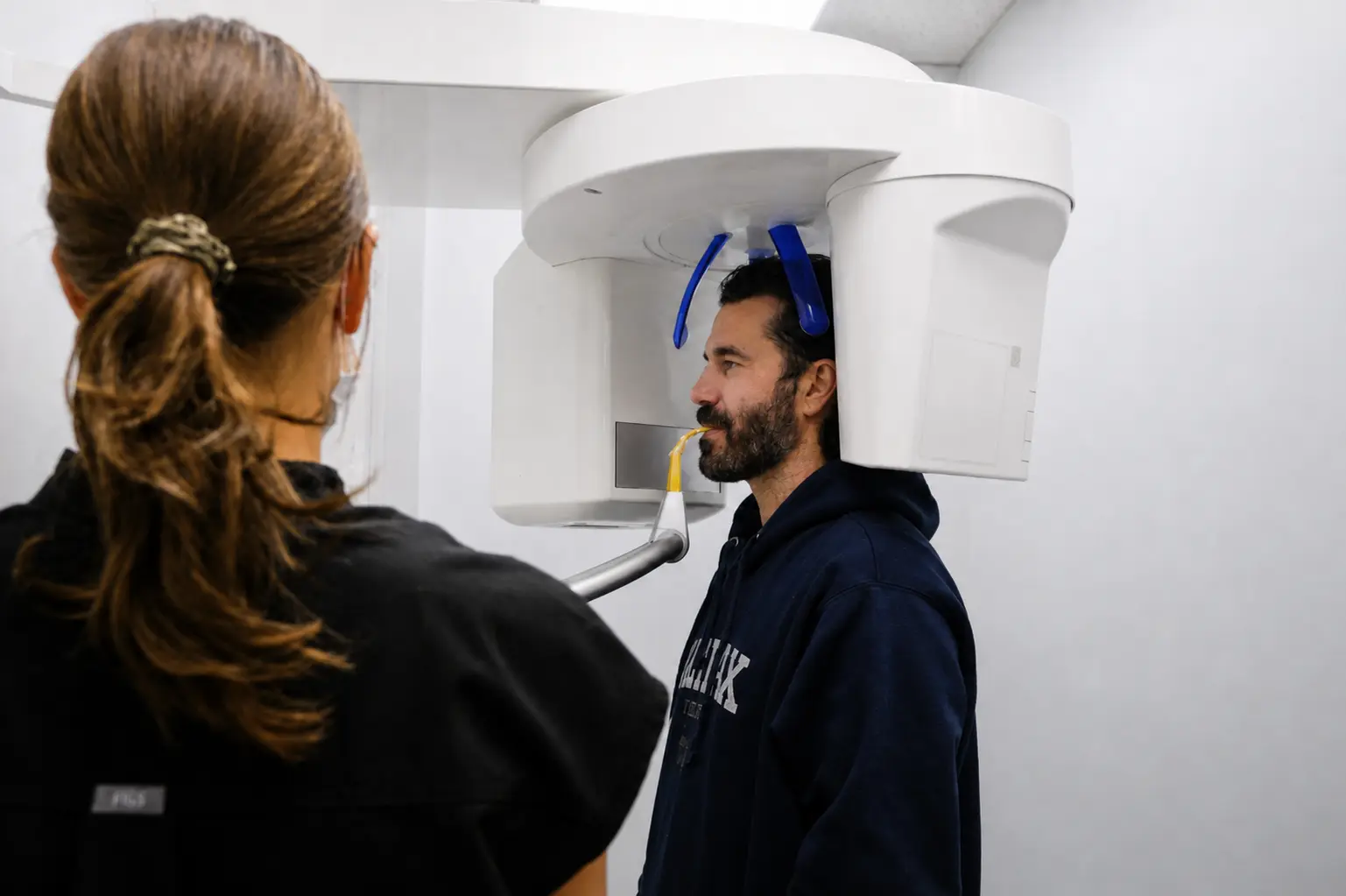
1. Diagnosis: an exam, simple tests and x-rays, with 3D imaging when it helps, confirm that the nerve is the problem and that the tooth can be saved.
2. Freezing: the tooth is fully numbed. Most patients say it feels much like getting a filling.
3. Cleaning the canals: through a small opening, the inflamed or infected pulp is removed and the canals are cleaned, shaped and disinfected.
4. Sealing: the canals are filled and sealed, and the opening is closed with a filling.
5. Protecting the tooth: back teeth become more brittle after a root canal, so we usually recommend a crown soon afterward.
Signs you may need a root canal
Pain to hot or cold that lingers after the drink is gone, a throbbing toothache, pain when you bite, swelling or a pimple-like bump on the gum, or a tooth that has darkened. Sometimes there is no pain at all and the infection only shows on an x-ray. If you are in pain now, see our emergency dentist page.
Does a root canal hurt?
The treatment itself usually feels like a filling, and many patients feel relief once the infected nerve is removed. The tooth can be tender for a few days afterward, which is usually managed with over-the-counter pain relievers that are safe for you.
How Much Does a Root Canal Cost in Calgary?
We follow the 2026 Alberta Dental Fee Guide. The fee depends on how many canals the tooth has:
2026 uncomplicated root-canal examples: one canal $795.45 (33111); two canals $1,158.35 (33121); three canals $1,354.65 (33131). The number of canals and case complexity determine the fee, not the tooth name alone. More canals or retreatment may cost differently; these examples are not a maximum treatment price.
Compare other dental fees and payment options.
Most back teeth also need a crown afterward to protect them, which is a separate fee. Most dental plans cover part of a root canal and we bill directly; root canals are also covered for eligible Canadian Dental Care Plan patients. Financing can help with the balance.
Root canal or extraction?
Pulling the tooth can cost less up front, but a missing tooth lets neighbouring teeth shift, and replacing it with an implant or bridge usually costs more than the root canal and crown. When a tooth can be saved, keeping it is usually the better long-term choice. We will tell you honestly if a tooth is not worth saving.
Recovery tips
Avoid chewing hard foods on the tooth until it has its final filling or crown, and brush and floss normally. Call us if swelling gets worse, pain is severe after a few days, or your bite feels high.

A More Comfortable Way to Move Forward
Many patients feel nervous when they hear the words “root canal,” but the real goal is usually to stop pain, control infection, and protect the tooth. Modern treatment planning can make the process much more manageable than patients expect.
At Macleod Trail Dental, we focus on clear explanations, comfort, and making the next step feel less overwhelming — especially when a patient is already in pain.
Frequently Asked Questions About Root Canals
The 2026 Alberta Dental Fee Guide's uncomplicated examples are $795.45 for one canal, $1,158.35 for two canals and $1,354.65 for three canals. More canals, retreatment or complex treatment may differ. Any required final filling, build-up or crown is additional. Private insurance and CDCP reimbursement depend on eligibility, coverage rules and any required approval; your written estimate explains the anticipated charges.
The tooth is numbed, so treatment usually feels like a filling, and many patients feel relief once the infected nerve is removed. Tenderness for a few days afterward is common.
Usually 60 to 90 minutes, in one or two visits depending on the tooth and how much infection there is.
Usually not, if the tooth can be saved. A missing tooth lets other teeth shift, and replacing it with an implant or bridge typically costs more than a root canal and crown.
Request an Appointment
Use this form to contact Macleod Trail Dental about booking, treatment questions, or the next best step for your visit.
Request a Root Canal Consultation
If you are dealing with tooth pain, swelling, or possible infection, Macleod Trail Dental can help you understand whether root canal therapy is the right next step.